Vegan shoes are no longer a niche choice. From elegant heels and everyday sneakers to barefoot shoes, boots and sandals, animal-free footwear has become a serious alternative for people who care about style, comfort, animals and the planet.
But what does “vegan shoes” actually mean?
Are vegan shoes always sustainable?
Are they durable?
Are they breathable?
And are they really better than leather?
This guide explains everything you need to know before choosing your next pair of vegan shoes.
👉 Explore our collection of vegan shoes for women and men.
What Are Vegan Shoes?
Vegan shoes are shoes made without any animal-derived materials.
That means they do not contain leather, suede, wool, silk, fur, animal-based glues or other ingredients that come from animals. Instead, vegan shoes can be made from innovative plant-based materials, recycled materials, natural textiles or high-quality synthetic alternatives.
Common vegan shoe materials include:
-
Corn-based materials
-
Cork
-
Hemp
-
Recycled polyester
-
Recycled rubber
-
Microfiber
-
PU-based vegan leather alternatives
-
Canvas
-
Natural or synthetic rubber
Important: “Vegan” means animal-free. It does not automatically mean sustainable, plastic-free or biodegradable. That is why transparency matters.
At NEW WORLD GUARDIANS, we believe the best vegan shoes combine three things: animal-free materials, fair production and long-lasting quality.
👉 Discover our curated collection of vegan footwear.
Why Are Conventional Leather Shoes Not Vegan?
Leather is made from animal skin. Suede, nubuck and many traditional shoe linings also come from animals. Even when leather is marketed as “natural” or “just a by-product”, it is still connected to industries that use animals for profit.
For many conscious consumers, this is the main reason to choose vegan footwear: they do not want animals to suffer or die for fashion.
But the issue does not stop there.
Leather production can also involve heavy chemical processing, tanning, high water use and environmental pollution. While high-quality leather can be durable, its durability does not erase the ethical problem behind the material.
Vegan shoes offer another path: footwear designed without animal exploitation.
👉 Learn more about the hidden cruelty behind leather
Vegan Leather vs. Animal Leather: What Is the Difference?
The biggest difference is simple:
Animal leather comes from animal skin.
Vegan leather alternatives do not.
However, vegan leather is not just one material. It is a broad term that can describe many different alternatives.
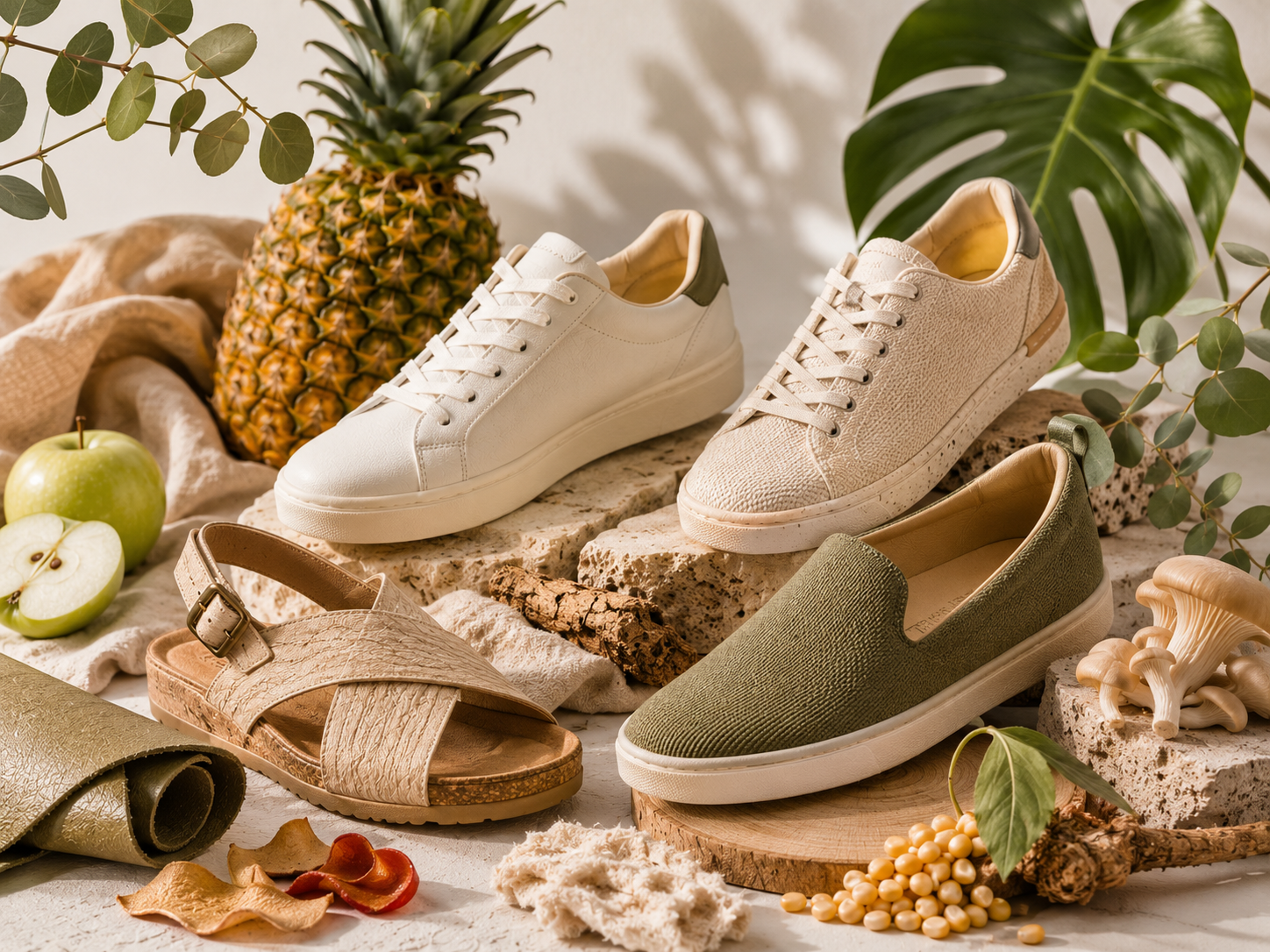
Some vegan leather alternatives are mainly synthetic, such as PU-based materials. Others use plant-based components, such as apple waste, pineapple leaf fibres, cactus, corn or mushroom-based materials. Many modern plant-based leather alternatives still use coatings, binders or backing layers to improve durability, flexibility and water resistance.
That means the honest answer is:
Not every vegan leather is plastic-free.
Not every vegan leather is sustainable.
But vegan leather does avoid animal-derived materials.
The best choice depends on the full material composition, quality, production standards, care and how long the product is used.
A cheap vegan shoe that falls apart quickly is not a good solution. But a well-made vegan shoe from a responsible brand can be a stylish, durable and more ethical alternative to leather footwear.
Why Vegan Shoes Do Not Have to Be Made of Plastic
One of the biggest myths about vegan shoes is that they are “just plastic shoes”.
This is outdated.
While many vegan shoes still use synthetic components, today’s animal-free footwear can include a wide range of innovative and lower-impact materials.
Examples include:
Piñatex / Pineapple Leather
Piñatex is made from pineapple leaf fibres, a by-product of pineapple agriculture. It is often used for sandals, sneakers and accessories. It offers a textured look and is one of the best-known plant-based leather alternatives.
Apple Leather Alternatives
Apple-based materials are often made using waste from the apple juice or food industry. They can create smooth, leather-like surfaces suitable for elegant shoes, sneakers and boots.
Mushroom-Based Materials
Mushroom leather alternatives are developed from mycelium, the root-like structure of fungi. They are considered one of the most exciting innovations in vegan fashion, although availability and scalability still vary.
Cork
Cork is naturally lightweight, flexible and renewable when harvested responsibly. It is often used for sandals, footbeds and shoe details.
Organic Cotton, Hemp & Canvas
Not every shoe needs to imitate leather. Sneakers, casual shoes and summer styles can be made from breathable textile materials such as organic cotton, hemp or canvas.
Recycled Materials
Recycled rubber, recycled polyester and other recycled components can help reduce the need for virgin resources when used thoughtfully.
The future of vegan footwear is not about replacing leather with one perfect material. It is about creating better options for different needs: elegant, breathable, durable, water-resistant, lightweight, formal or casual.
👉 Learn more about sustainable vegan fashion materials
Are Vegan Shoes Durable?
Yes, vegan shoes can be durable - but durability depends on quality, construction and care, not only on whether a shoe is vegan or non-vegan.
A well-made vegan shoe can last for years, especially when it has:
-
Strong stitching
-
High-quality soles
-
Durable upper materials
-
Good lining
-
Proper reinforcement
-
Responsible craftsmanship
-
The right care routine
At the same time, low-quality vegan shoes can wear out quickly, just like low-quality leather shoes can.
The most important factor is not the label “vegan” alone. It is the overall quality of the shoe.
To make vegan shoes last longer:
-
Choose the right shoe for the right purpose
-
Let shoes dry naturally after rain
-
Avoid direct heat from radiators
-
Clean them gently
-
Use suitable vegan shoe care products
-
Rotate between pairs if possible
-
Store them in a dry, ventilated place
Sustainability starts with buying better and using longer.
Are Vegan Shoes Breathable?
Vegan shoes can be breathable, but not every vegan material performs the same way.
Breathability depends on the material, lining, design and construction of the shoe.
For example, vegan shoes made with organic cotton, hemp, canvas or textile uppers can feel very breathable, especially in warmer weather. Sandals and open designs naturally allow more airflow. Some vegan sneakers also use mesh or perforated materials to improve ventilation.
Leather-like vegan materials may be less breathable if they have a dense coating or waterproof finish. But the same is true for many coated leather shoes.
If breathability is important to you, look for:
-
Textile uppers
-
Natural fibres such as organic cotton or hemp
-
Perforated designs
-
Open sandals
-
Breathable linings
-
Removable insoles
-
Shoes designed for the correct season
The key message: vegan shoes are not automatically less breathable. It depends on the design and material choice.
Are Vegan Shoes Waterproof?
Some vegan shoes are water-resistant or waterproof, but not all of them.
A vegan sneaker made from canvas will behave differently from a vegan boot with a water-resistant membrane or treated upper. Plant-based and synthetic leather alternatives can often handle light rain, but they may still need proper care and protection.
For rainy days, hiking or winter, look for shoes specifically described as water-resistant or waterproof. Always check the product details instead of assuming that a material is suitable for every weather condition.
How to Know If Shoes Are Really Vegan
Finding truly vegan shoes can be confusing because shoe labels do not always tell the full story.
In the EU, footwear labels usually show the materials used for three parts of the shoe:
-
Upper
-
Lining and insole
-
Outer sole
The material categories are usually leather, coated leather, textile and other materials.
However, this does not always make vegan shopping simple. “Textile” can include animal-derived materials such as wool, unless the brand clearly states the exact material. Also, labels may not always explain the glue, dyes or smaller components used.
To shop more safely, check for:
-
Clear “vegan” product descriptions
-
Transparent material lists
-
PETA-Approved Vegan certification
-
Brand-level vegan commitments
-
No leather, suede, wool, silk or animal-derived materials
-
Vegan shoe care products
-
Honest information about plant-based and synthetic components
When in doubt, choose brands and marketplaces that specialize in vegan footwear.
Are Vegan Shoes More Sustainable Than Leather Shoes?
This question deserves an honest answer.
Vegan shoes avoid animal exploitation, which is a major ethical advantage. Many vegan materials can also have environmental benefits compared with animal leather, especially when they use recycled, plant-based or lower-impact components.
However, not every vegan shoe is automatically sustainable.
Some vegan leather alternatives are partly or mainly plastic-based. Some plant-based materials still need synthetic binders or coatings for durability. And any shoe - vegan or not - has an environmental footprint if it is produced cheaply, worn only a few times or thrown away quickly.
The most sustainable vegan shoe is usually one that is:
-
Animal-free
-
High quality
-
Designed to last
-
Made from thoughtful materials
-
Produced under fairer conditions
-
Worn often and cared for properly
At NEW WORLD GUARDIANS, we believe conscious fashion should be honest. Vegan is essential for avoiding animal suffering. Sustainability requires additional care: better materials, transparency, durability and responsible consumption.
👉 Learn more about sustainability Labels
What Are the Best Vegan Shoe Materials?
There is no single “best” vegan shoe material for every purpose. The right choice depends on the type of shoe and how you want to wear it.
Best for Summer
Look for cork, organic cotton, hemp, canvas, Piñatex, open sandal designs and breathable linings.
👉 best vegan sandals for women
👉 best vegan sandals for men
Best for Everyday Sneakers
Recycled materials, organic cotton, vegan microfiber, apple-based materials and durable textile blends can be good choices.
👉 best vegan sneakers for women
👉 best vegan sneaker for men
Best for Elegant Shoes
Apple leather alternatives, corn-based materials, high-quality vegan microfiber and smooth plant-based leather alternatives can create a polished look.
👉 best vegan elegant shoes for women
👉 best vegan elegant shoes for men
Best for Outdoor Use
Look for vegan shoes specifically designed for durability, grip, weather resistance and comfort. Hemp, recycled materials, performance textiles and water-resistant vegan materials can work well when used in the right construction.
👉 best vegan hiking, outdoor & sports shoes for women
👉 best vegan hiking, outdoor & sports shoes for men
Best for Barefoot Shoes
Flexible vegan materials, thin soles, wide toe boxes and lightweight textile or microfiber uppers can support natural movement.
Common Myths About Vegan Shoes
Myth 1: Vegan shoes are always plastic.
Not true. Many vegan shoes use plant-based, recycled or natural textile materials. Some still contain synthetic components, but vegan footwear is much more diverse than “plastic shoes”.
Myth 2: Leather is always more sustainable.
Not necessarily. Leather comes from animals and often requires intensive processing. A leather shoe can be durable, but that does not make it cruelty-free or automatically environmentally responsible.
Myth 3: Vegan shoes do not last.
High-quality vegan shoes can last for years when cared for properly. Durability depends on design, materials and craftsmanship.
Myth 4: Vegan shoes are not breathable.
Some vegan shoes are very breathable, especially those made from textiles, mesh, hemp, organic cotton or open sandal designs. Breathability depends on construction, not only on whether a shoe is vegan.
Myth 5: Vegan means perfect.
Vegan means animal-free. It does not automatically mean sustainable, fair, biodegradable or toxin-free. That is why conscious consumers should look for transparency and quality.
Why Vegan Shoes Matter
Choosing vegan shoes is about more than avoiding leather.
It is about questioning what we wear, who pays the price for it and what kind of future we want to support.
Every purchase sends a signal.
A signal that animals are not materials.
A signal that innovation matters.
A signal that fashion can be stylish without cruelty.
A signal that better choices are possible.
At NEW WORLD GUARDIANS, we curate vegan and sustainable shoes from brands that are rethinking footwear with compassion, creativity and responsibility.
Because shoes should take you forward - not hold the world back.
Final Thoughts: Are Vegan Shoes Worth It?
Yes - if you choose them consciously.
Vegan shoes are worth it when they are made with care, selected for your lifestyle and worn for a long time. They offer a powerful alternative to animal leather and show that style, comfort and ethics can belong together.
The future of footwear is not about choosing between fashion and values.
It is about wearing both.
Explore Vegan Shoes at NEW WORLD GUARDIANS
Discover vegan sneakers, sandals, boots, barefoot shoes, dress shoes and sustainable footwear alternatives at NEW WORLD GUARDIANS.
👉 All vegan and sustainable shoes at NEW WORLD GUARDIANS STORE
Every purchase supports our aid projects around the world.
Your Style. Your Values. Your Impact.