How to Start a Healthy, Balanced & Conscious Vegan Lifestyle
For many people, going vegan starts with a simple question:
“How can I live more aligned with my values?”
Whether it begins through compassion for animals, environmental awareness, health goals, or a desire to consume more consciously - vegan living is becoming far more than just a food trend. For many, it becomes a complete lifestyle shift toward greater awareness, sustainability, and intentional living.
But starting a vegan lifestyle can also feel overwhelming at first.
What should you eat?
Do you need supplements?
How do you stay healthy long term?
What nutrients actually matter?
And how can you make more sustainable choices beyond food - including fashion, movement, and daily habits?
At NEW WORLD GUARDIANS, we believe vegan living should feel realistic, balanced, empowering, and sustainable long term - not restrictive or extreme.
This beginner-friendly guide was created to help you build a healthy vegan lifestyle in a practical and informed way. We’ll cover the most important nutrients, supplements, common beginner mistakes, movement, sustainable fashion, and evidence-based tips that genuinely matter for long-term well-being.
Whether you’re transitioning gradually or fully plant-based already, this guide is designed to help you avoid confusion, feel more confident, and create habits that support your health and a more compassionate future.
Why More People Are Choosing a Vegan Lifestyle
A growing number of people are embracing vegan living for a variety of reasons:
- Animal welfare & compassion
- Environmental sustainability
- Health & well-being
- Ethical consumption
- Climate awareness
- Conscious fashion & lifestyle choices
Research from organizations such as the Academy of Nutrition and Dietetics and Harvard Health suggests that well-planned vegan diets can support overall health and may be associated with benefits such as improved cardiovascular health, lower LDL cholesterol levels, and higher fiber intake.
But there’s one very important detail:
A vegan diet needs to be planned properly.
Simply removing animal products without understanding nutrition can increase the risk of deficiencies over time. That’s why education matters.
First Things First: Don’t Aim for “Perfect”
One of the biggest beginner mistakes is trying to become the “perfect vegan” overnight.
Instead:
✔ Focus on progress
✔ Learn gradually
✔ Build sustainable habits
✔ Keep meals simple at first
✔ Don’t panic if you make mistakes
Many long-term vegans started by replacing meals step by step rather than changing everything in one day.
A sustainable vegan lifestyle should reduce stress - not create it.
What Should a Healthy Vegan Plate Look Like?
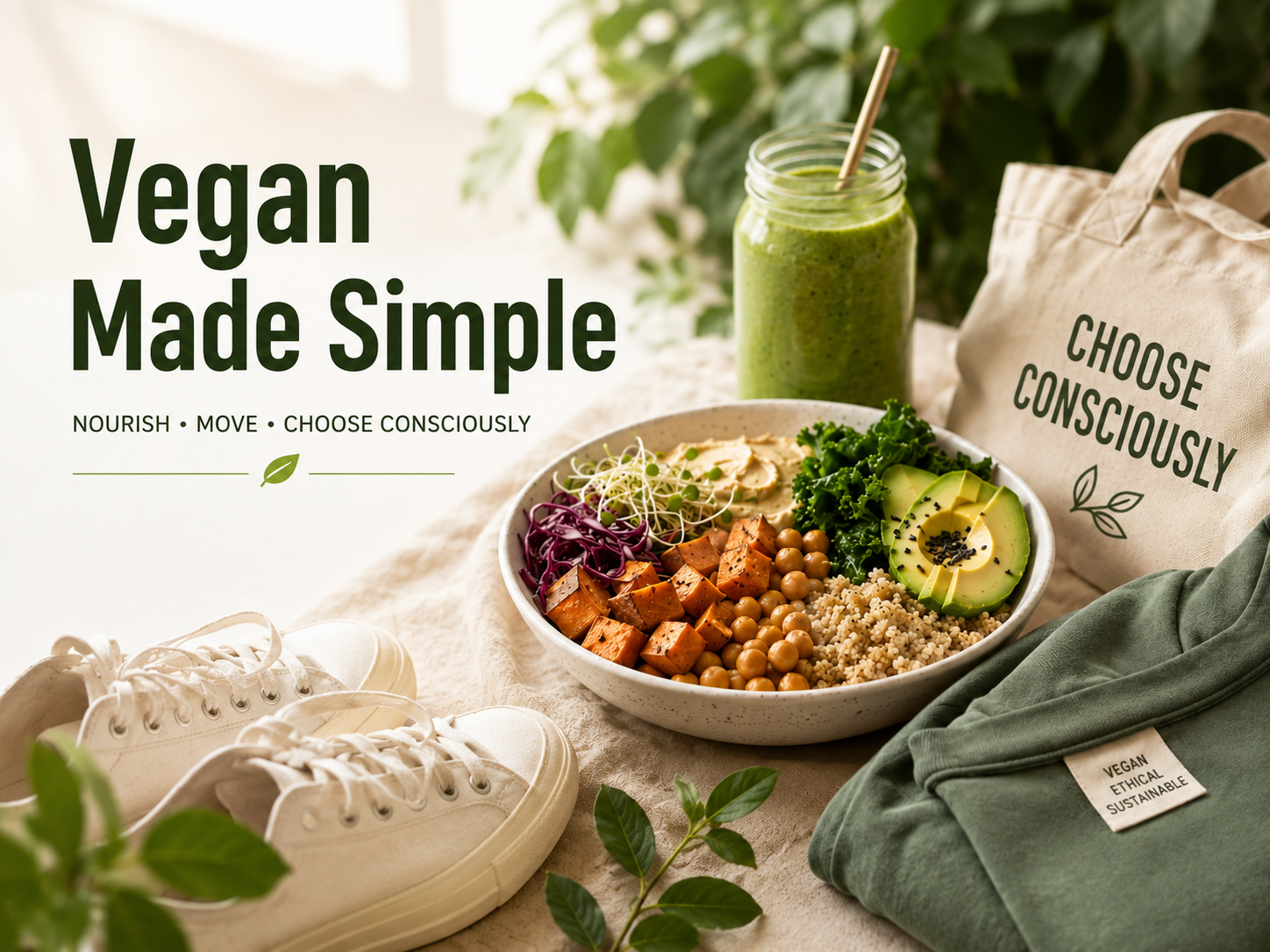
A balanced vegan diet should ideally include:
- Whole grains
- Legumes
- Vegetables
- Fruits
- Nuts & seeds
- Healthy fats
- Reliable fortified foods and/or supplements

Great Plant-Based Protein Sources
Many people worry about protein when going vegan - but getting enough protein is usually very achievable when meals are balanced.
Excellent vegan protein sources include:
- Lentils
- Chickpeas
- Beans
- Tofu
- Tempeh
- Edamame
- Seitan
- Hemp seeds
- Pumpkin seeds
- Quinoa
- Soy yogurt
- Protein-rich plant milks
According to Harvard Health, a varied plant-based diet can provide sufficient protein for most people.
The Most Important Nutrients Vegans Need to Watch
This is where many beginner guides stay too vague - but these nutrients genuinely matter.

1. Vitamin B12 — The Most Important Supplement
Vitamin B12 is one nutrient that vegans absolutely need to pay attention to.
B12 is not reliably available in unfortified plant foods. Multiple medical and nutrition organizations recommend fortified foods and/or supplementation for vegans.
Why B12 matters:
- Nervous system function
- Energy metabolism
- Red blood cell formation
- Brain health
Potential signs of deficiency:
- Fatigue
- Brain fog
- Tingling sensations
- Memory issues
- Weakness
Reliable vegan B12 sources:
- Fortified plant milks
- Fortified cereals
- Nutritional yeast (if fortified)
- B12 supplements
Many healthcare professionals recommend regular blood work for long-term vegans to monitor B12 status.
2. Iron
Iron is possible to obtain through plant foods — but absorption can differ compared to animal-based iron.
Good vegan iron sources:
- Lentils
- Chickpeas
- Beans
- Tofu
- Pumpkin seeds
- Oats
- Spinach
- Fortified cereals
Important tip:
Vitamin C improves iron absorption significantly.
Example:
- Lentils + bell peppers
- Spinach + lemon juice
- Oats + berries
Organizations including the NHS highlight iron as one of the nutrients vegans should consciously plan for.
3. Omega-3 Fatty Acids
Omega-3s support:
- Brain health
- Heart health
- Eye health
Vegan omega-3 sources:
- Chia seeds
- Flax seeds
- Hemp seeds
- Walnuts
- Algae-based omega-3 supplements
Some healthcare professionals and nutrition experts recommend algae-based DHA/EPA supplements, especially for people who rarely consume omega-3-rich foods.
4. Vitamin D
Vitamin D deficiency is common in many populations - not only vegans.
Depending on where you live, sun exposure, and the season, supplementation may be helpful.
Vegan vitamin D sources:
- Fortified plant milks
- UV-exposed mushrooms
- Vegan vitamin D supplements
The NHS and Harvard Health both note that vitamin D intake deserves attention in vegan diets.
5. Calcium
Calcium is available in many plant foods.
Great vegan calcium sources:
- Fortified soy milk
- Fortified oat milk
- Tofu set with calcium
- Tahini
- Almonds
- Kale
- Broccoli
Not all plant milks are nutritionally equal - always check labels for calcium fortification.
6. Iodine
Iodine is one nutrient many beginner vegans overlook.
Vegan iodine sources:
- Iodized salt
- Some sea vegetables
- Iodine supplements
Both the NHS and nutrition experts regularly identify iodine as a nutrient of concern in vegan diets.
Common Beginner Vegan Mistakes to Avoid
Starting a vegan lifestyle does not mean you need to become “perfect” overnight. In fact, many beginners struggle not because veganism is unhealthy - but because they unintentionally create imbalances while transitioning too quickly.
Here are some of the most common beginner mistakes and how to avoid them.
1. Not Supplementing Vitamin B12
Vitamin B12 is one of the few nutrients that requires particular attention on a vegan diet. Relying purely on unfortified plant foods is generally not considered a reliable long-term source.
Consistent B12 supplementation or fortified foods are important parts of a balanced vegan lifestyle.
2. Eating Too Little Overall
Some people accidentally undereat when switching to plant-based meals because many whole plant foods are naturally lower in calories and higher in fiber.
Signs can include:
- fatigue
- low energy
- constant hunger
- brain fog
- cravings
Balanced vegan meals should include enough:
- protein
- healthy fats
- complex carbohydrates
- calories overall
3. Living Mostly on Salads
A healthy vegan diet is not just salads and smoothies.
Long-term satisfaction and proper nutrition usually require:
- legumes
- grains
- protein sources
- healthy fats
- cooked meals
- nutrient diversity
Warm, balanced meals are often much more sustainable and satisfying.
4. Ignoring Iron-Rich Foods
Iron deserves conscious planning on a vegan diet.
Pairing iron-rich foods with vitamin C sources can help support absorption naturally.
Example combinations:
- lentils + bell peppers
- tofu + broccoli
- spinach + lemon juice
5. Expecting Perfection Immediately
One of the healthiest approaches to veganism is consistency - not perfectionism.
Small sustainable improvements over time are often far more effective than extreme restrictions that become difficult to maintain long term.
Supplements: What Most Vegans Commonly Consider
There is no universal supplement plan for everyone, and individual needs vary depending on diet, health status, age, lifestyle, blood work, and medical history.
However, many vegans commonly discuss or consider:
- Vitamin B12
- Vitamin D
- Omega-3 (DHA/EPA)
- Iodine
- Iron (only if needed and medically appropriate)
Important:
Supplements should ideally be discussed with a qualified healthcare professional - especially if you have existing medical conditions, take medication, are pregnant, or experience symptoms such as fatigue or hair loss.
This article is for educational purposes only and does not replace professional medical advice.
Whole Foods Matter More Than “Vegan Junk Food”
A product being labeled “vegan” does not automatically make it healthy.
Many ultra-processed vegan foods can still be:
- High in sugar
- High in saturated fats
- Low in fiber
- Low in micronutrients
A balanced vegan lifestyle works best when centered around:
✔ Whole foods
✔ Variety
✔ Fiber-rich meals
✔ Nutrient density
✔ Long-term sustainability
Movement & Exercise Are Part of Conscious Living Too
Health is not only about food.
Movement plays a huge role in:
- Mental health
- Energy levels
- Bone strength
- Cardiovascular health
- Longevity
- Stress management
You do not need an extreme fitness routine.
Simple activities already make a difference:
- Walking
- Cycling
- Hiking
- Yoga
- Strength training
- Climbing
- Dancing
A conscious lifestyle is about supporting your body - not punishing it.
Mental Health & Social Pressure
One topic that’s often ignored in vegan beginner guides is emotional balance.
Not everyone around you will understand your lifestyle change immediately.
You may experience:
- Questions from friends or family
- Social awkwardness
- Restaurant challenges
- “Where do you get your protein?” conversations
That’s normal.
Try to stay grounded and avoid turning veganism into perfectionism or constant stress. Sustainable change usually works better than extreme pressure.
Vegan Fashion: Conscious Choices Beyond Food 🌿
For many people, vegan living naturally expands into other areas - including fashion.
Traditional fashion industries can involve:
- Animal-derived materials
- Intensive resource use
- Fast-fashion waste
- Harmful working conditions
That’s why more conscious consumers are looking for:
At NEW WORLD GUARDIANS, we focus on curated vegan and sustainable fashion brands that align with conscious living - because what we wear can also reflect our values.
Discover conscious essentials including vegan sneakers, sustainable hoodies, cruelty-free backpacks, and timeless vegan footwear collections at NEW WORLD GUARDIANS.
You don’t need to replace your entire wardrobe overnight. In fact, continuing to wear items you already own is often more sustainable than over-consuming “eco” products impulsively.
Conscious fashion is about making better decisions over time - not chasing perfection.
Beginner Vegan Grocery Essentials 🛒
Here are some practical staples that make vegan eating easier:
Pantry Basics
- Oats
- Rice
- Pasta
- Lentils
- Beans
- Chickpeas
- Quinoa
- Nuts
- Seeds
- Nut butters
Fridge Staples
- Tofu
- Tempeh
- Soy yogurt
- Hummus
- Plant milk
- Vegetables
- Fruit
Helpful Extras
- Nutritional yeast
- Tahini
- Frozen berries
- Frozen vegetables
- Vegan protein powder (optional)
Keeping simple ingredients at home makes healthy vegan meals dramatically easier.

A Realistic Beginner Meal Example 🌱
Breakfast
Oats with soy milk, berries, flax seeds & peanut butter
Lunch
Lentil bowl with quinoa, roasted vegetables & tahini dressing
Snack
Apple with almond butter
Dinner
Tofu stir fry with rice, broccoli & sesame seeds
Balanced vegan eating does not need to be complicated.
Common Questions About Starting a Vegan Lifestyle 🌱
Can you get enough protein on a vegan diet?
Yes - many plant foods naturally contain protein, including lentils, tofu, tempeh, beans, soy products, quinoa, nuts, and seeds. Most people can meet their protein needs with a balanced and varied vegan diet.
Do vegans need supplements?
Vitamin B12 supplementation is commonly recommended for vegans because reliable amounts are generally not naturally available in plant foods. Depending on lifestyle, location, diet, and individual needs, some people may also discuss vitamin D, omega-3, iodine, or iron with healthcare professionals.
Is a vegan diet healthy long term?
Major nutrition organizations state that appropriately planned vegan diets can be nutritionally adequate for many stages of life. Long-term balance, nutrient awareness, and proper planning are important.
What are the healthiest foods for beginner vegans?
Some excellent beginner staples include:
- lentils
- tofu
- oats
- beans
- quinoa
- berries
- leafy greens
- nuts
- seeds
- fortified plant milk
Simple whole-food meals are often the easiest and most sustainable starting point.
Is vegan fashion more sustainable?
Not all fashion marketed as “sustainable” is automatically ethical or environmentally friendly. However, many vegan fashion brands focus on lower-impact materials, cruelty-free production, durability, and more conscious manufacturing practices compared to traditional fast fashion models.
Discover curated vegan and sustainable fashion collections at NEW WORLD GUARDIANS.
Final Thoughts: Veganism Should Feel Sustainable - For You & The Planet
A healthy vegan lifestyle is not built on restriction. It’s built on awareness, balance, compassion, and consistency.
The goal is not to become perfect overnight.
The goal is to:
- Learn
- Grow
- Stay curious
- Support your health
- Reduce unnecessary harm
- Make more conscious choices over time
With proper planning, reliable information, and a balanced mindset, vegan living can become a deeply fulfilling lifestyle that supports both personal well-being and a more compassionate future.
And perhaps most importantly:
You do not need to do everything perfectly to make a meaningful difference.
Disclaimer
This article is intended for general educational and informational purposes only and does not constitute medical, nutritional, or healthcare advice. Nutritional needs vary from person to person. Before making major dietary changes or starting supplements, consult a qualified healthcare professional or registered dietitian - especially if you have medical conditions, take medication, are pregnant, breastfeeding, or experience symptoms related to nutrient deficiencies.
Discover Conscious Vegan Fashion 🌿
Explore curated vegan & sustainable fashion brands at:
Fashion for conscious humans who want to create a better future together.