The Truth About Animal Cruelty, Worker Exploitation, and Sustainable Alternatives
More Than Just a By-Product
Many people believe that leather is simply a waste product of the meat industry. But this widely accepted narrative hides a darker reality. Leather is not just a harmless "leftover" - it is a co-product that drives both animal suffering and human exploitation. In this article, we expose the cruelty of the leather industry and show why recycled leather isn't the solution. Instead, we invite you to discover vegan leather alternatives and support a more ethical future.
Leather Is Not Just "Waste"
Contrary to popular belief, leather is not a passive by-product - it's a valuable co-product that increases the profitability of animal agriculture.
Why this matters:
-
The value of animal hides encourages more slaughter.
-
Leather profits help subsidise factory farming.
-
The global leather market is growing, not shrinking.
When we buy leather, we support the demand for animals to be bred, exploited, and killed - even if we don't eat meat ourselves.
In fact, the Food and Agriculture Organization (FAO) has identified leather as a significant economic contributor to the livestock sector. This means that leather is actively driving demand for animal products.
The Hidden Cruelty Behind Leather
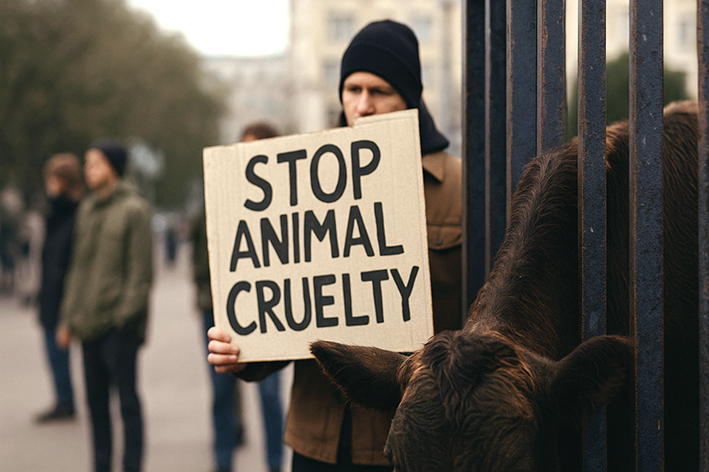
Leather often comes with intense suffering for animals:
-
Animals are castrated, branded, and dehorned without anesthesia.
-
Transport conditions are horrific: no food, water, or rest.
-
Calves, lambs — even unborn animals — are killed for their soft skins.
- In countries like China, dogs and cats are killed for their skins — often mislabelled and exported as "real leather."
- Wild animals like crocodiles, snakes, and ostriches are farmed or hunted for luxury leather goods.
- Many of these animals are skinned alive or killed using barbaric methods to preserve the quality of the hide.
Investigations in countries like India, Bangladesh, and Brazil have revealed shocking abuses:
-
Cattle being dragged by their tails and beaten to move them to slaughter.
-
Pregnant animals slaughtered for "fetal leather."
-
Skins sourced from animals who collapsed from exhaustion and disease.
There is no such thing as humane leather. Leather always starts with a life taken.
Moreover, so-called "ethically sourced" or "local" leather is often untraceable. Global supply chains make it nearly impossible to know if leather goods in Europe were sourced from deforestation-linked ranches in the Amazon or abusive slaughterhouses in Asia.
The Human Cost: Toxic Work & Exploitation
The leather industry also harms people - especially marginalised workers in tanneries and low-wage factories.
Dangerous Conditions in Tanneries:
-
Workers are exposed to chromium, formaldehyde, arsenic, and solvents.
-
Common illnesses: skin diseases, asthma, cancer.
-
Protective equipment and safety training are often missing.
In places like Kanpur, India — home to hundreds of tanneries — wastewater from leather production contaminates the Ganges River. Workers wade barefoot in toxic sludge. Many suffer from respiratory illnesses and cancers.
Social Injustice:
-
Many workers earn extremely low wages.
-
Long working hours, lack of contracts, and exploitation are common.
-
Women and children are especially vulnerable to abuse and toxic exposure.
Communities living near tanneries often lack access to clean water due to industrial pollution. The human rights cost of leather is not a distant problem - it is a present, global injustice.
Why We Don’t Support Recycled Leather
At NEW WORLD GUARDIANS, we reject recycled leather because:
-
It still comes from animal suffering.
-
It can contain toxic residues like chromium VI.
-
It reinforces the idea that animal skin is a "material."
-
It is not aligned with vegan or cruelty-free values.
Even if leather is "reused," the suffering has already occurred - and recycled leather continues to normalise and valorise animal-based materials.
We also question transparency: recycled leather is often mixed with synthetic binders (e.g. polyurethane), making it neither biodegradable nor truly sustainable.
We stand for integrity - not half measures. Recycled leather is not a cruelty-free solution.
The Future: Vegan & Sustainable Leather Alternatives 🌱
We believe in innovative, planet-friendly, animal-free materials. Some of our favorites:
-
Apple leather (AppleSkin™): Made from leftover apple peels from the juice industry — durable, low-impact, and partially biodegradable.
-
Pinatex: Created from pineapple leaf fibers — a waste product from agriculture. Water-efficient and strong.
-
Cactus leather (Desserto®): Requires minimal water and no herbicides. Soft, durable, and perfect for shoes and accessories.
-
Recycled PET: Derived from used plastic bottles, it reduces plastic waste while offering cruelty-free structure and strength.
All our shoes are made with innovative vegan materials and support circular design.
Read more about sustainable Materials in our blog 👉 The Leading Sustainable Vegan Fashion Materials
We Have the Power to Choose Better
Choosing not to wear leather is more than a fashion statement. It's a commitment to life, fairness, and sustainability.
Join us in reshaping the fashion industry:
-
Say no to cruelty.
-
Say yes to innovation.
-
Walk consciously. Wear compassion.
Every product you choose makes a statement. Every purchase is a vote for the kind of world you want to live in.
NEW WORLD GUARDIANS is proud to be a voice for ethical fashion - because style should never come at the cost of suffering.
💚 Explore our vegan and cruelty-free footwear here 👉 Vegan Shoes for women and men